2024 – Present
Our coffee table book is a curated journey through modern African interiors, where texture, heritage, and contemporary design meet effortlessly.
This is an ode to the African home, reimagined, refined, and deeply rooted.
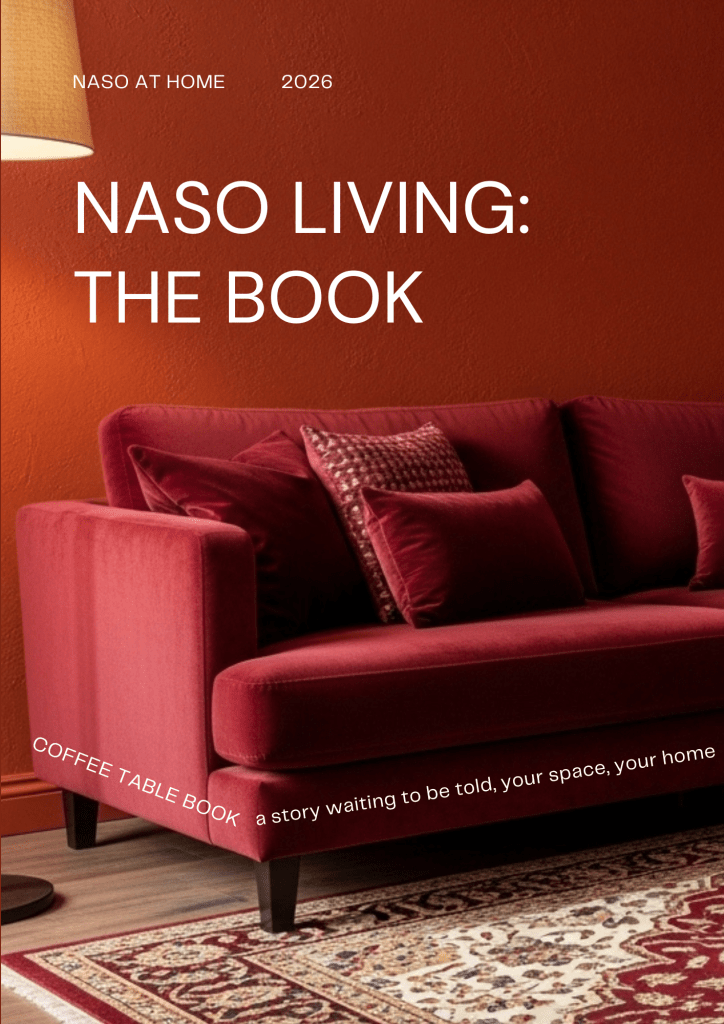
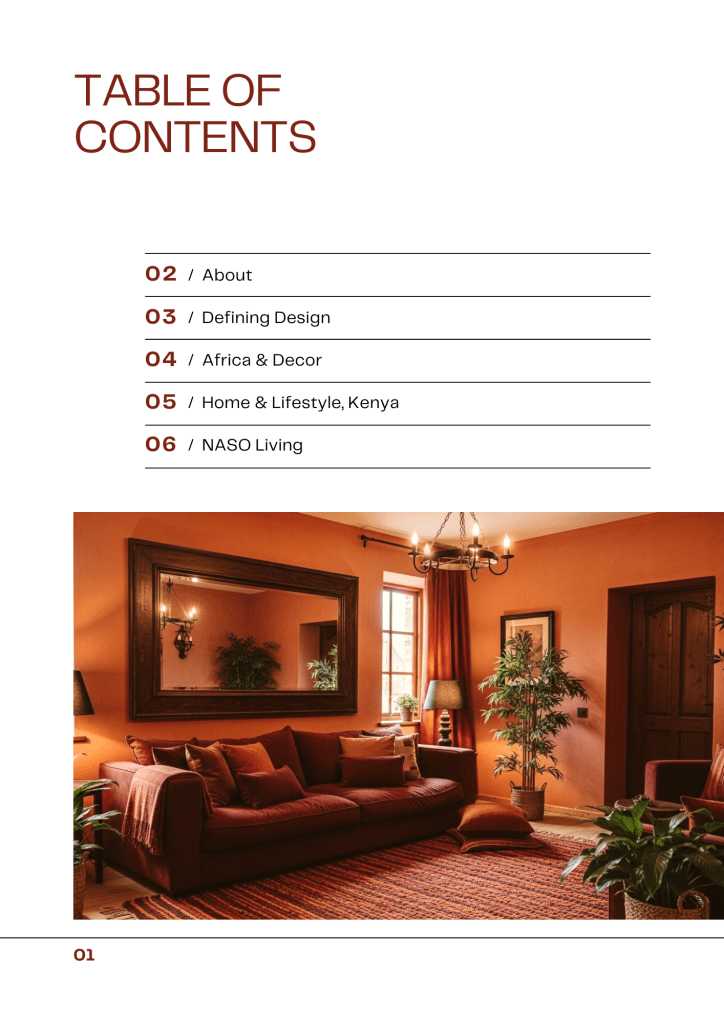
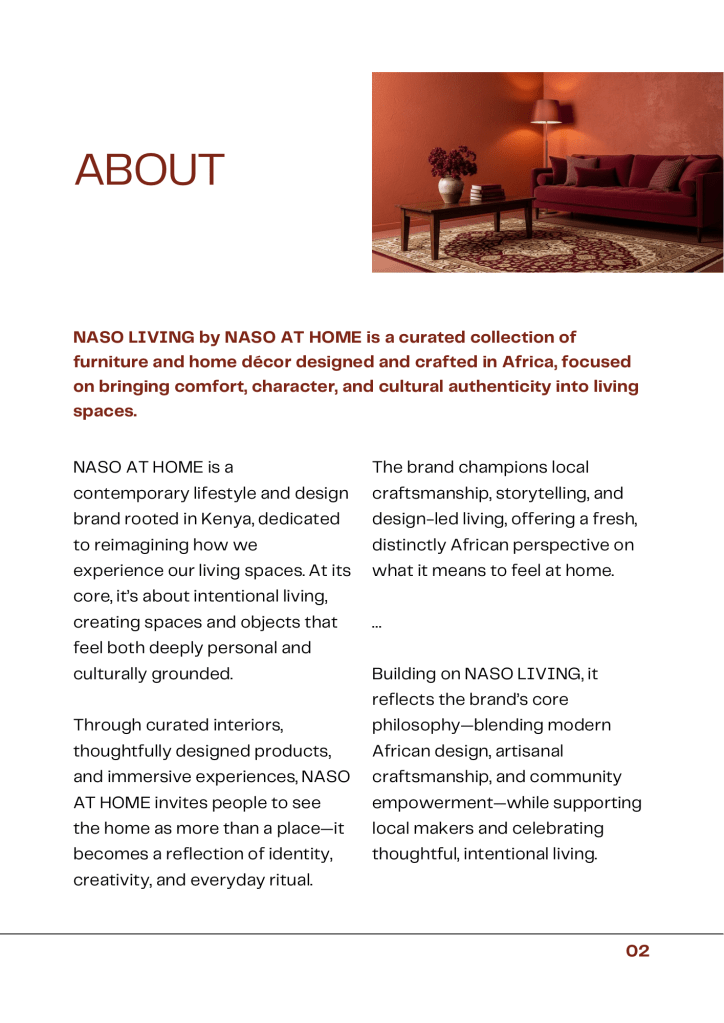
From the title cover to the content and “about” pages, this first reveal is a quiet glimpse into what’s been carefully shaped, an exploration of how we live, feel, and design within our spaces.
Rooted in intention and guided by the spirit of NASO AT HOME, this book captures a way of living that is both deeply personal and unmistakably African, where design becomes memory, ritual, and identity.
Coming soon via digital release, with print to follow.
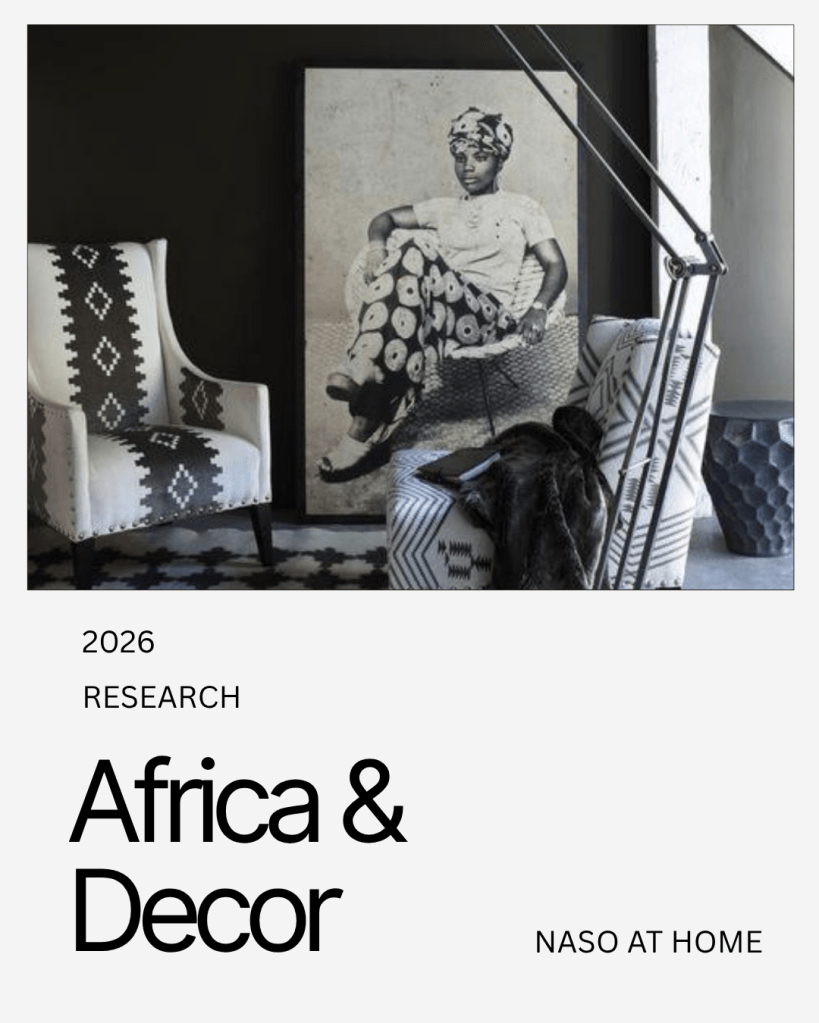
My current research explores African decor as a living design language, one shaped by culture, geography, and time.
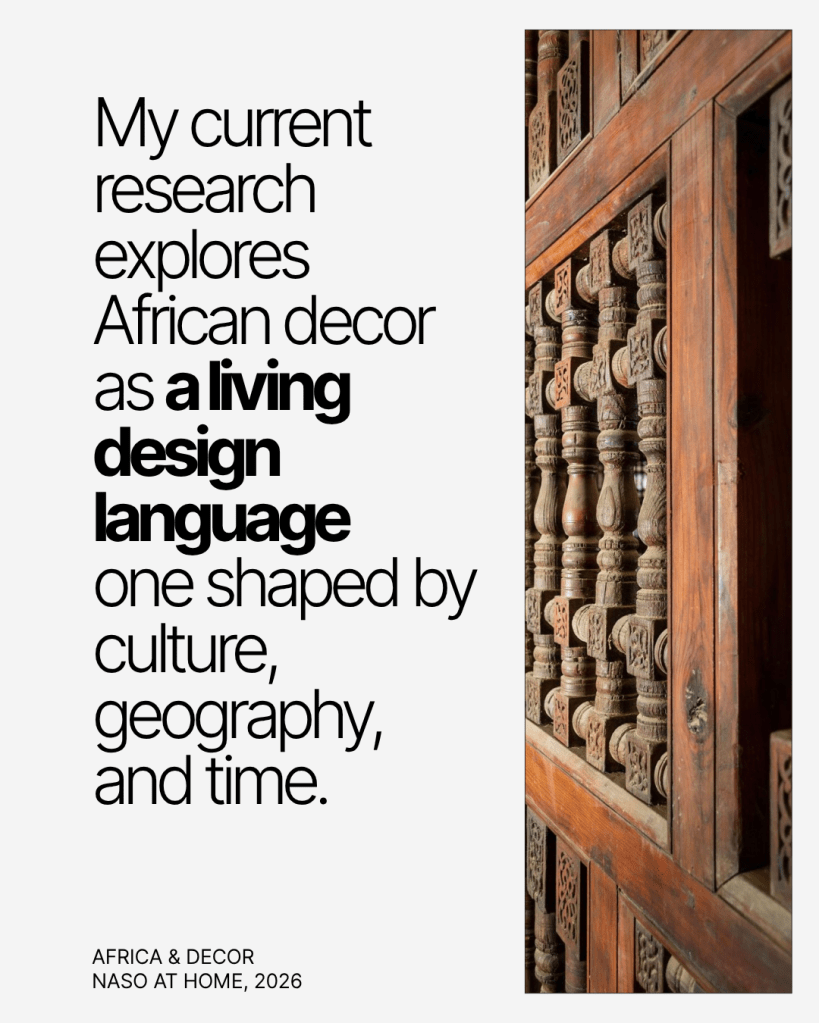
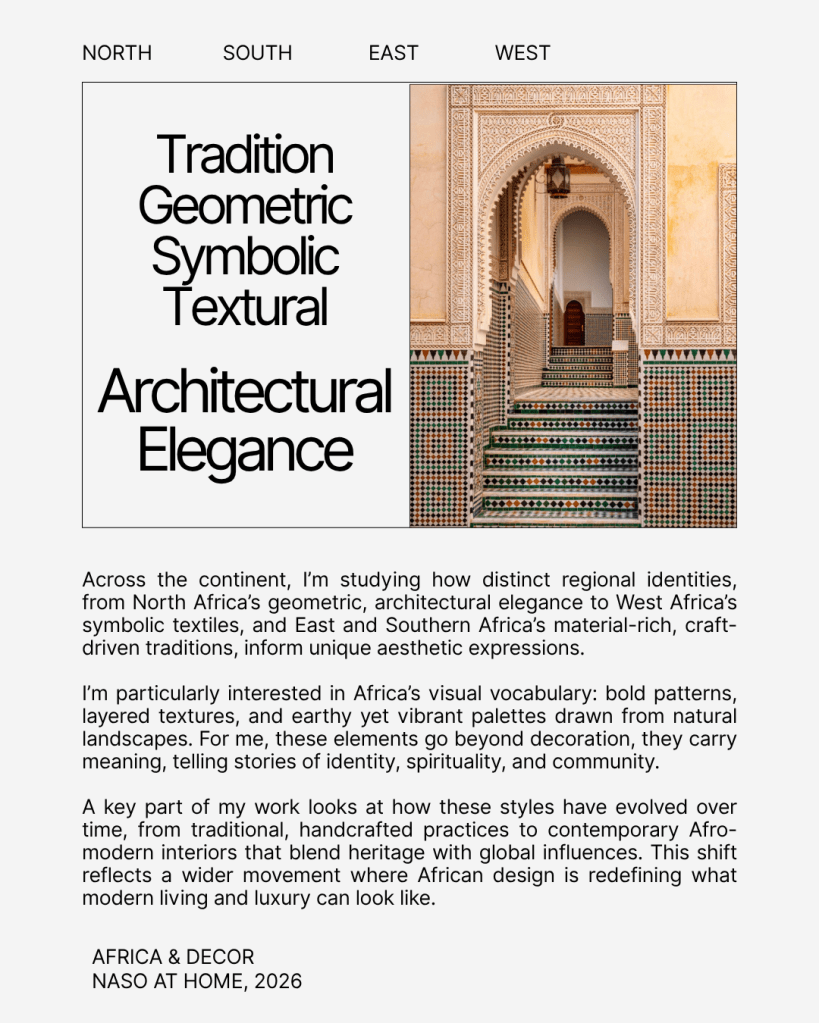
Across the continent, I’m studying how distinct regional identities, from North Africa’s geometric, architectural elegance to West Africa’s symbolic textiles, and East and Southern Africa’s material-rich, craft-driven traditions, inform unique aesthetic expressions.
I’m particularly interested in Africa’s visual vocabulary: bold patterns, layered textures, and earthy yet vibrant palettes drawn from natural landscapes. For me, these elements go beyond decoration, they carry meaning, telling stories of identity, spirituality, and community.
A key part of my work looks at how these styles have evolved over time, from traditional, handcrafted practices to contemporary Afro-modern interiors that blend heritage with global influences. This shift reflects a wider movement where African design is redefining what modern living and luxury can look like.
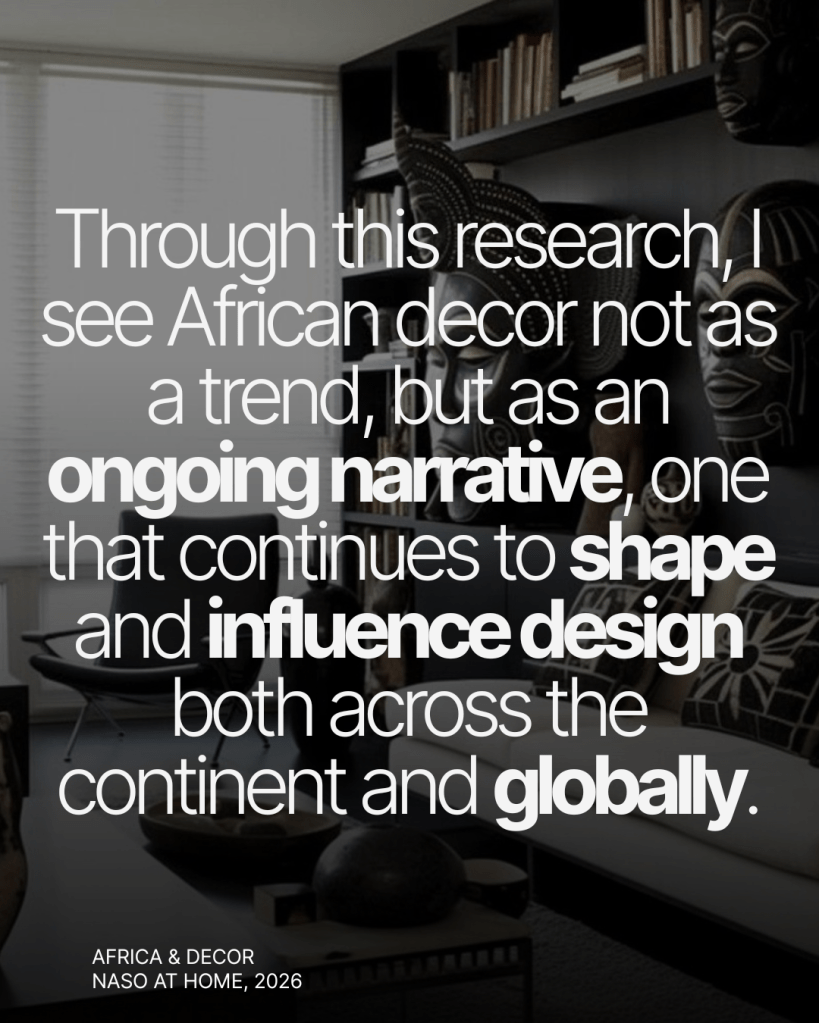
Through this research, I see African decor not as a trend, but as an ongoing narrative, one that continues to shape and influence design both across the continent and globally.
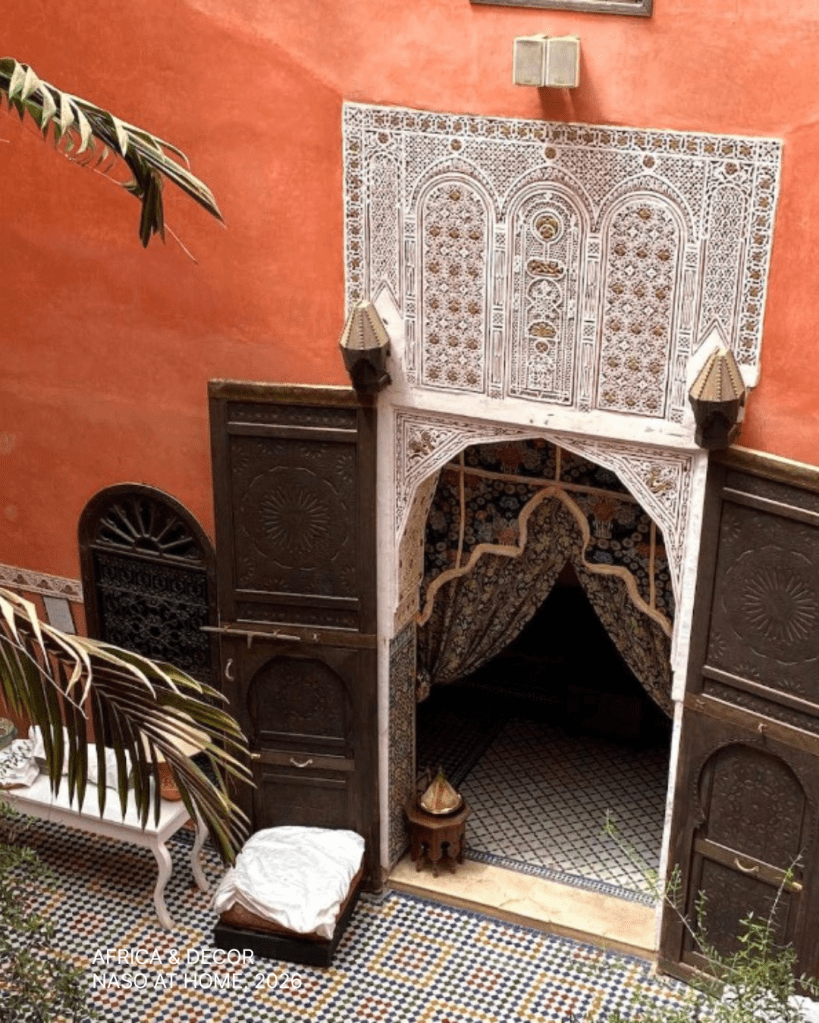
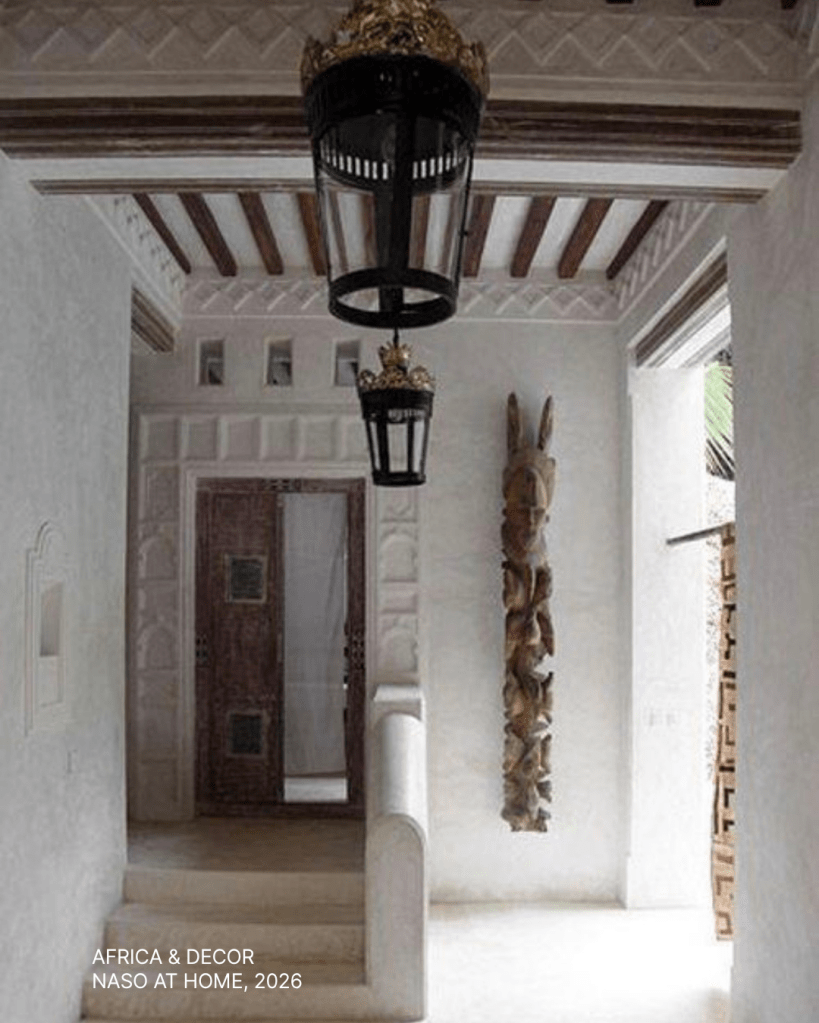
Extract: Mombasa Old Town is a coastal historic district shaped by centuries of Swahili, Arab, Portuguese, and South Asian influence, reflected strongly in its architecture and urban form.
Its key design elements include coral stone buildings with thick walls that help regulate heat, and intricately carved wooden doors that often signal status and cultural identity. Many buildings feature enclosed courtyards, shaded verandas, and overhanging balconies that encourage airflow in the humid coastal climate.
The street pattern is notably narrow and winding, creating shade and reflecting its organic, pre-colonial growth. Decorative details, such as carved niches, lattice screens, and plaster ornamentation, blend Islamic artistic traditions with Swahili craftsmanship. The overall aesthetic is enriched by faded pastel tones, sea-facing orientation, and a dense, layered urban texture tied to its history as a Swahili trading hub.
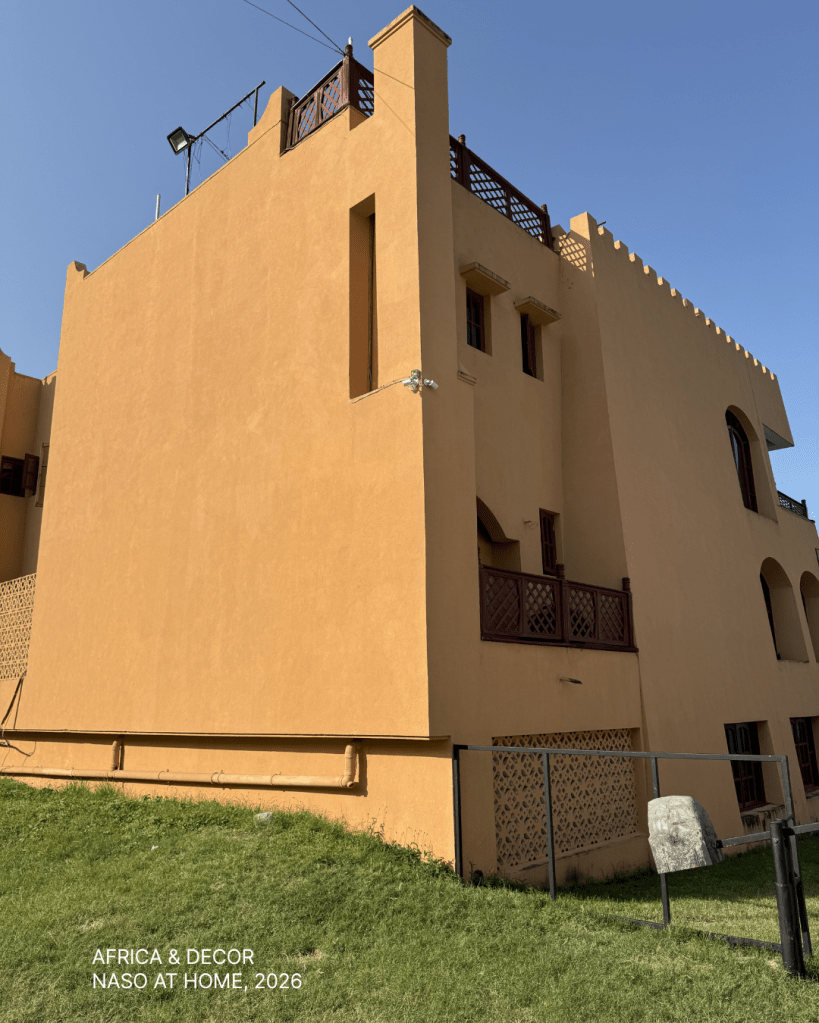
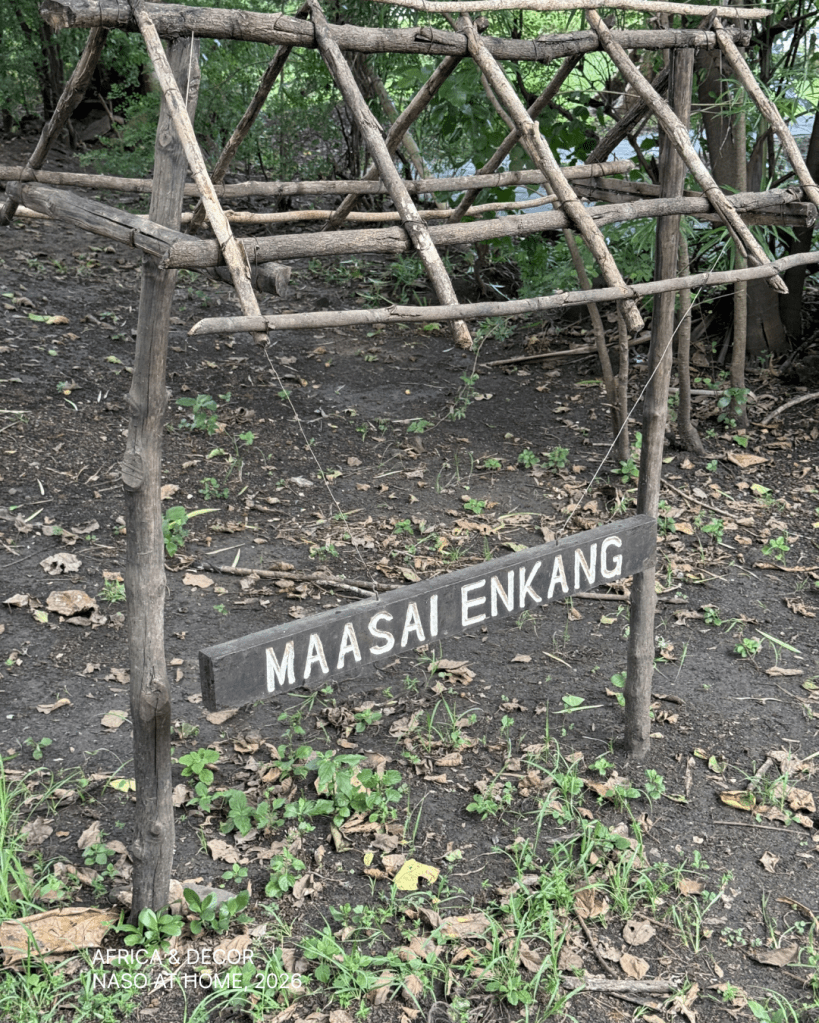
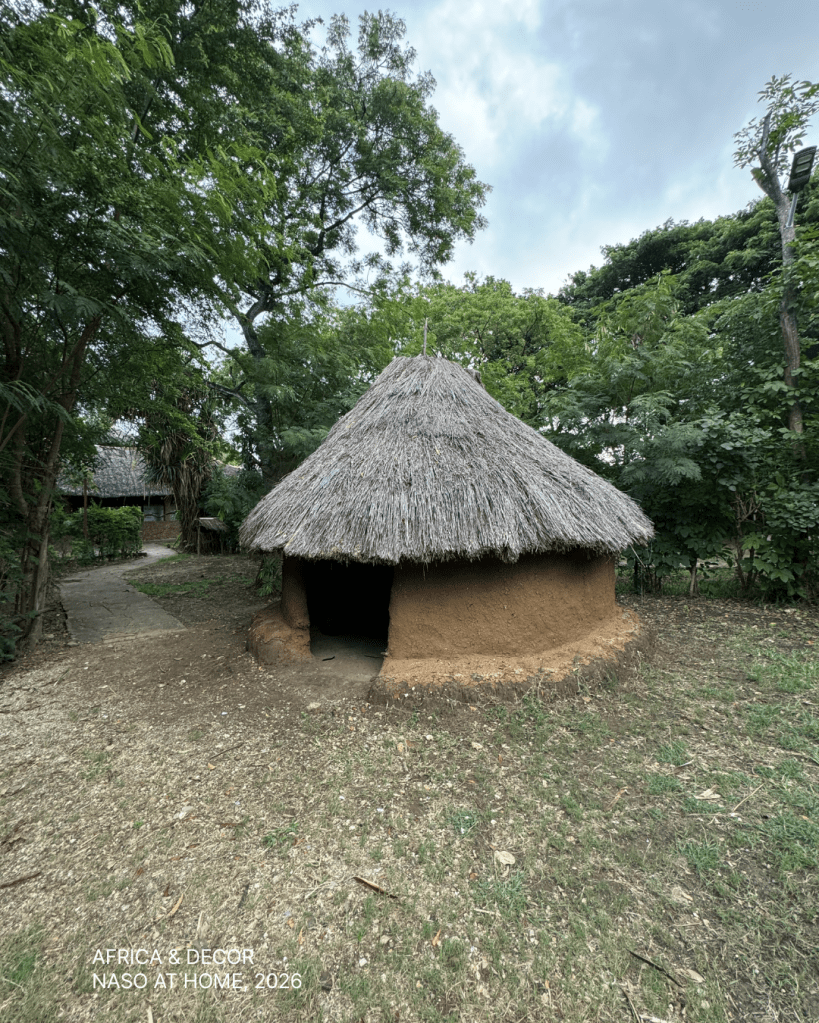
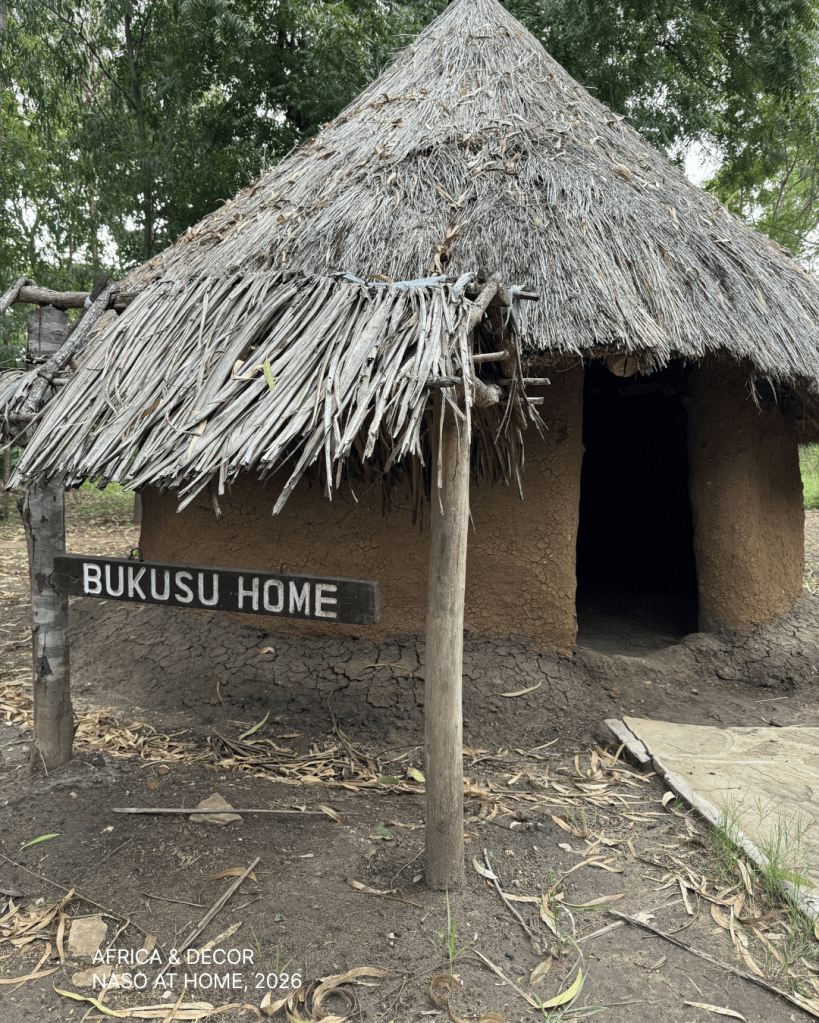
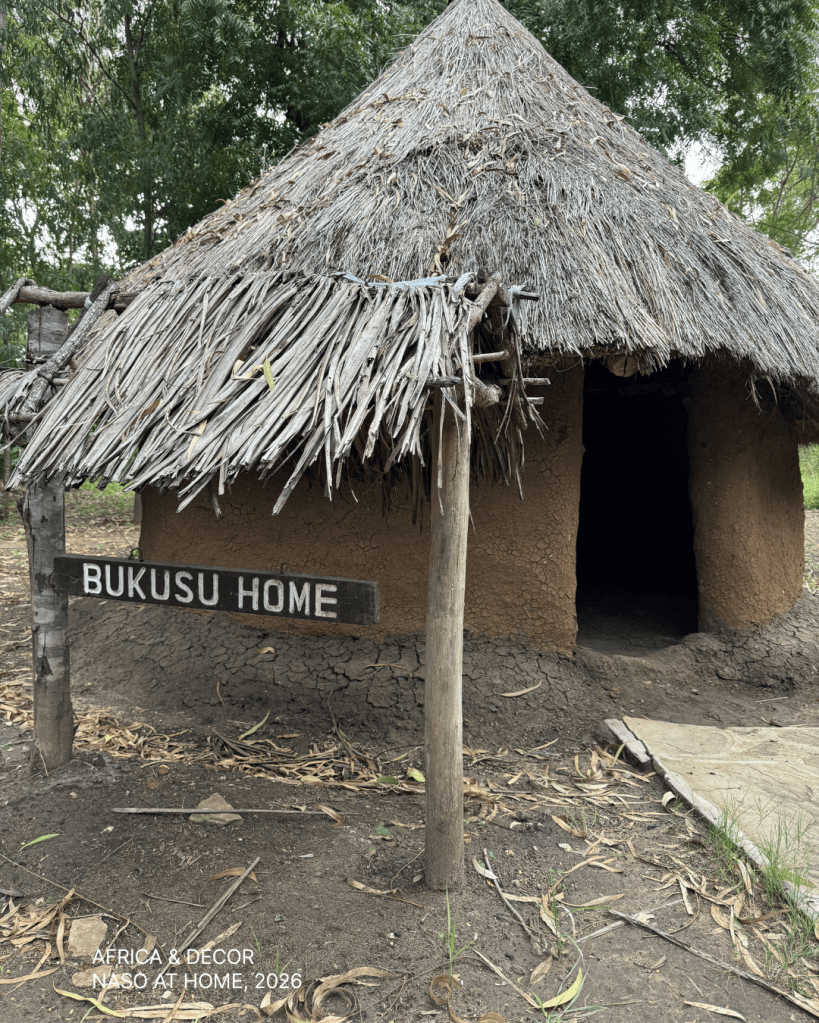
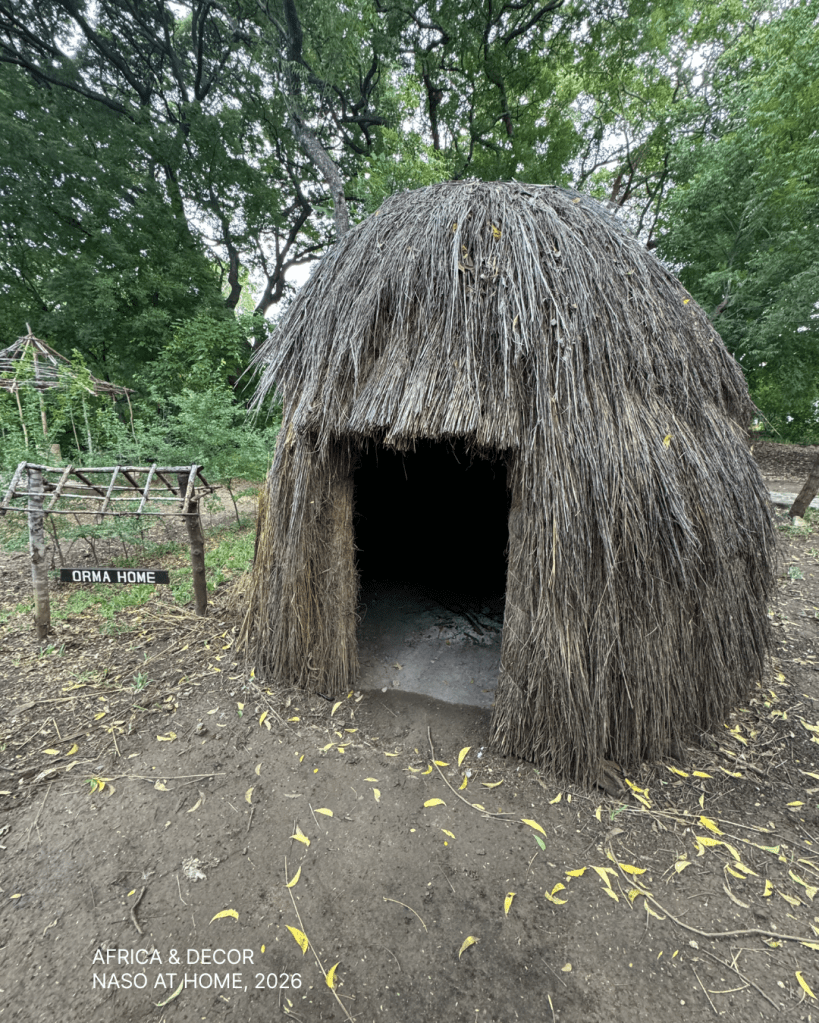
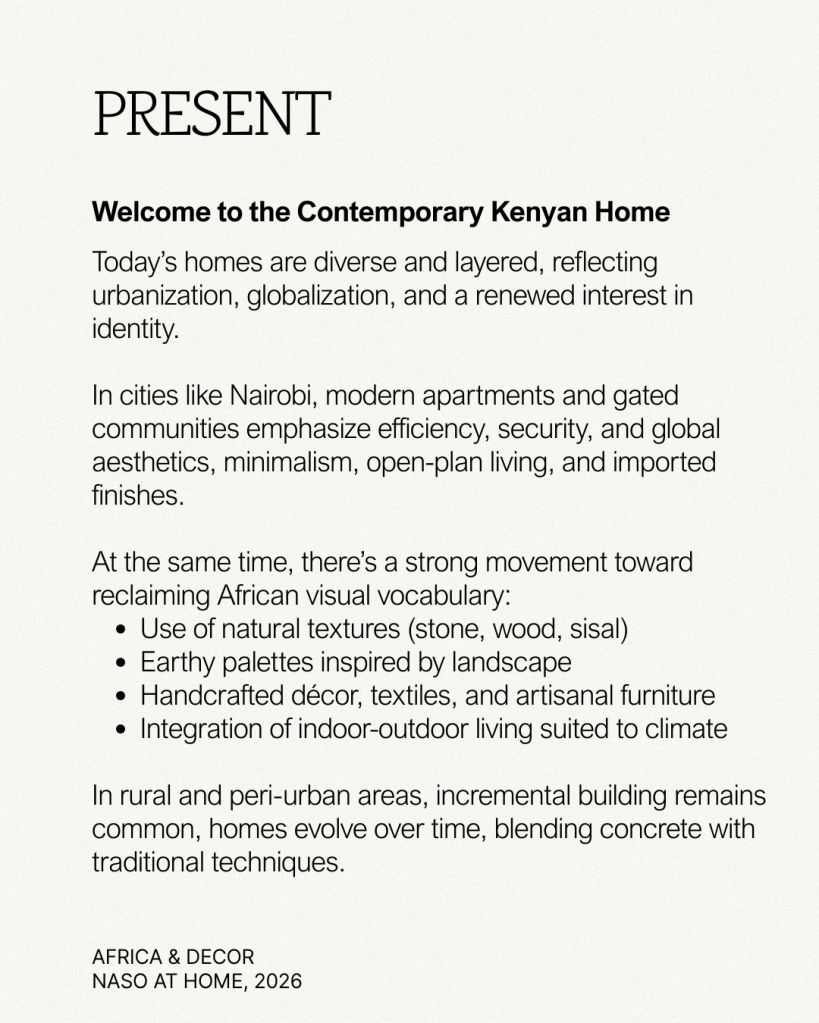
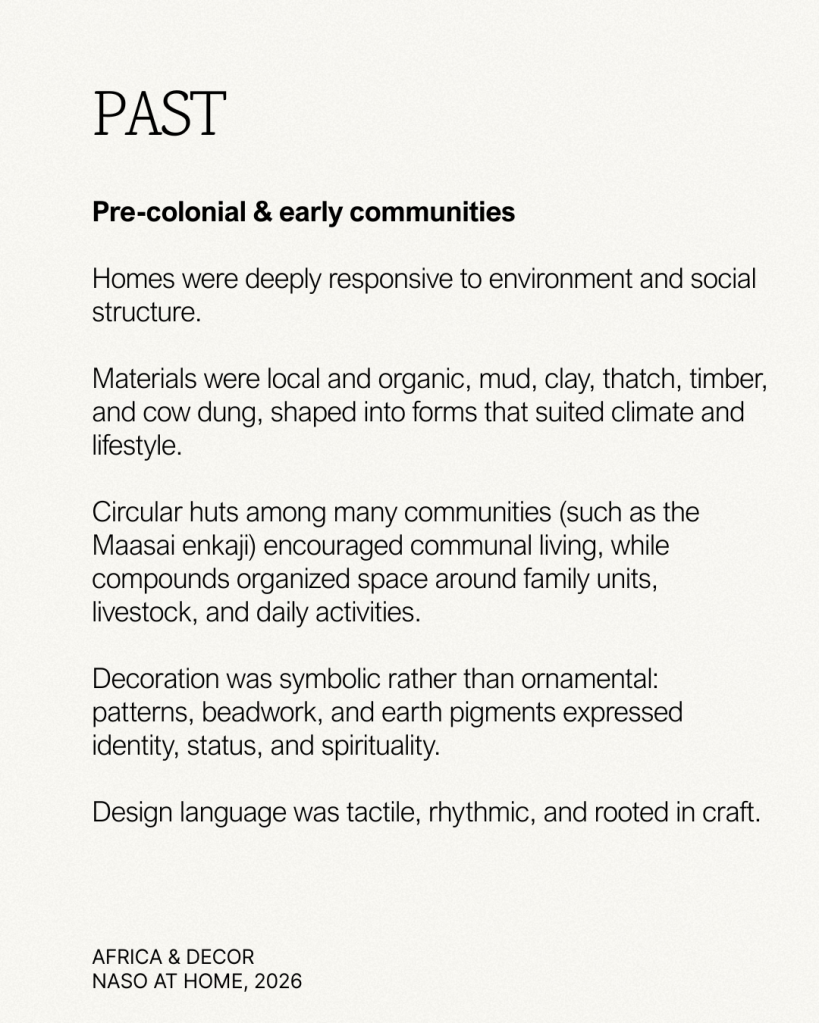
From earth to home, early Kenyan dwellings were shaped by climate, community, and craft.
Circular forms, shared spaces, architecture as a reflection of connection and culture.
Meet Penninah, Founder of Afro Boutik Home & Lifestyle
Meet Penninah, the creative force behind Afro Boutik Home & Lifestyle, a brand that celebrates the beauty, character and richness of African-inspired living.
Through Afro Boutik, Penninah brings together art, décor and lifestyle pieces that tell stories creating spaces that feel personal, expressive and connected to African culture. Her approach reflects a growing movement of Kenyan creatives who are reimagining what contemporary African homes can look and feel like: rooted in heritage, but beautifully modern.
What makes Penninah’s journey particularly inspiring is her ability to turn a love for African aesthetics and design into a lifestyle brand with a distinct point of view. Her work is a reminder that our homes can be more than beautifully decorated spaces they can be a reflection of who we are, where we come from and the stories we choose to surround ourselves with.
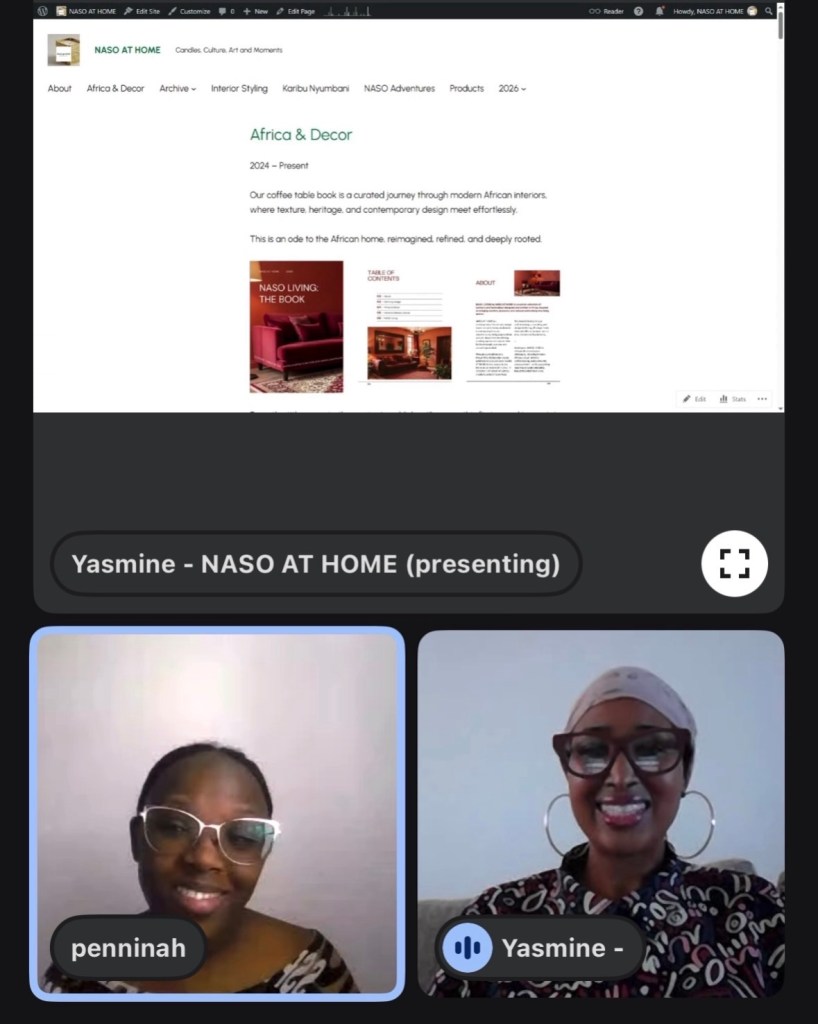
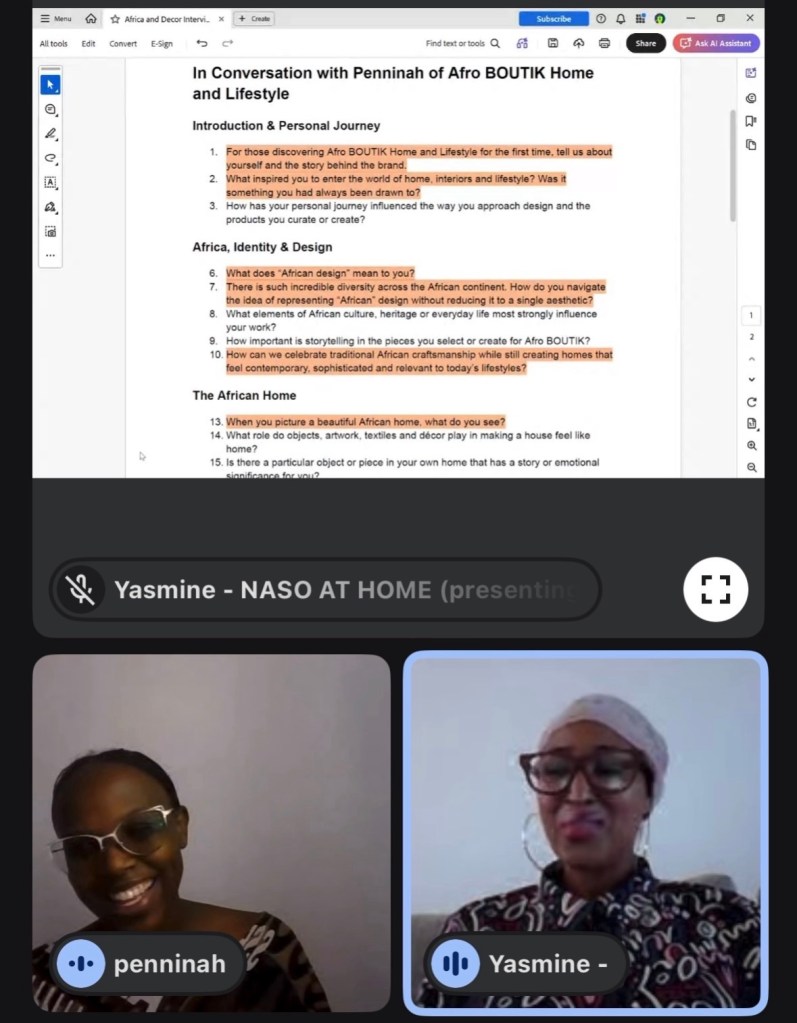
We’re delighted to spotlight Penninah and Afro Boutik Home & Lifestyle as part of the growing community of Kenyan brands shaping the future of African home and lifestyle. But more interestingly, her views on Africa and Decor.
Introduction and Personal Journey
1. For those discovering Afro BOUTIK Home and Lifestyle for the first time, tell us about yourself and the story behind the brand.
My name is Penninah, I am the founder of Afroboutik, a home and lifestyle brand based in Nairobi, Kenya. Afroboutik was founded out of my love for African craftmanship, specifically my love for African textiles and through Afroboutik, I hope to help people bring that craftsmanship back into their homes and find contemporary ways to appreciate and live with it.
2. What inspired you to enter the world of home, interiors and lifestyle? Was it something you had always been drawn to?
I noticed how disconnected many of the homes around me were from our culture, partly as a result of globalization and the after-effects of colonization. It made me want to find a way to bring some of that cultural connection back into our homes, but in a contemporary context that still reflects how we live today.
3. How has your personal journey influenced the way you approach design and the products you curate or create?
My journey has made me much more interested in the relationship between culture, identity and design. I’ve come to see the home as more than just a space that needs to look beautiful. It can also be a reflection of who we are, where we come from and what we value. That is why I am drawn to pieces that have a sense of history, craftsmanship and meaning, but can still exist naturally in a contemporary home.
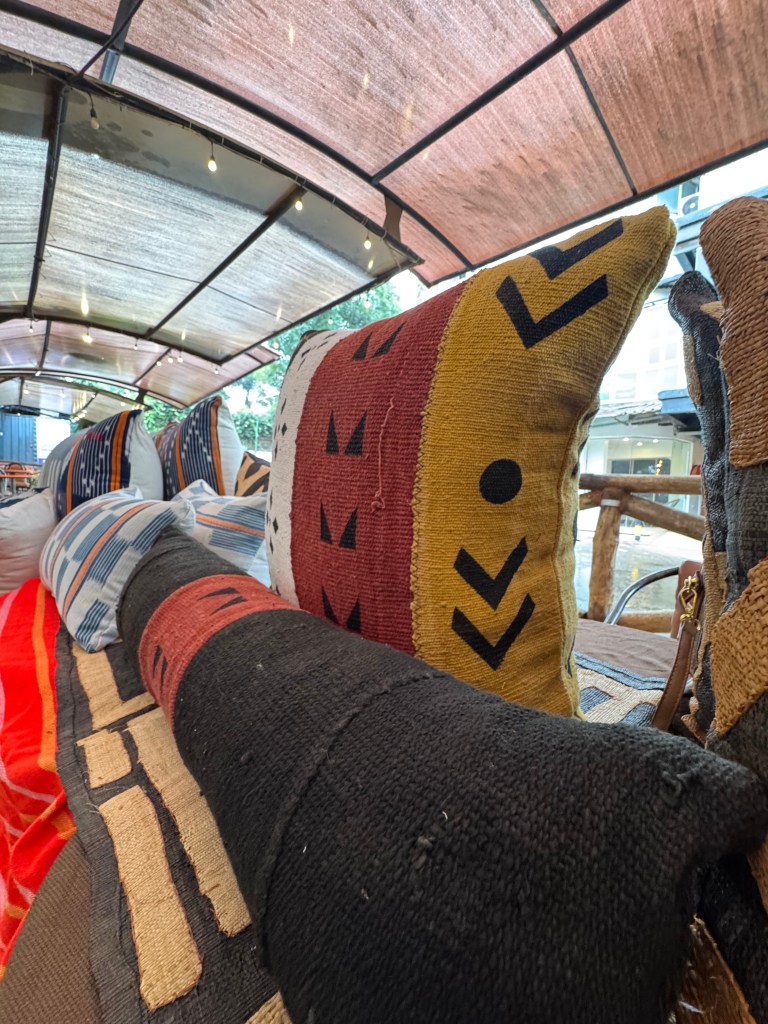
Africa, Identity and Design
6. What does “African design” mean to you?
I don’t think there is one single design style that can be called African because Africa is incredibly diverse. The way people traditionally designed and inhabited spaces was shaped by different cultures, traditions, materials and even environmental conditions. However, there are some unifying philosophies you find across many of these spaces: the use of indigenous materials, a deep appreciation for artisanal craftsmanship, and deep symbolism and meaning in the work created.So, for me, African design is less about a particular visual style and more about these underlying philosophies. Anything rooted in them can, in my view, be considered a form of African design.
7. There is such incredible diversity across the African continent. How do you navigate the idea of representing “African” design without reducing it to a single aesthetic?
I think the only way to do this is to represent Africa authentically by being culturally sensitive, avoiding stereotypes and homogenization, giving proper credit, and ensuring that the diverse peoples and cultures of the continent are represented fairly.
8. What elements of African culture, heritage or everyday life most strongly influence your work?
The design philosophies that are found across the many cultures of Africa: the use of indigenous materials, a deep appreciation for artisanal craftsmanship, and the symbolism and meaning found in the work created.
9. How important is storytelling in the pieces you select or create for Afro BOUTIK?
It is very important. I think an item becomes more meaningful when you understand something about where it comes from and the people, traditions and stories connected to it.
10. How can we celebrate traditional African craftsmanship while still creating homes that feel contemporary, sophisticated and relevant to today’s lifestyles?
For me, the goal is to use African tradition and culture as inspiration rather than simply trying to replicate the past. That means taking something that already has meaning and reimagining it in a contemporary way.
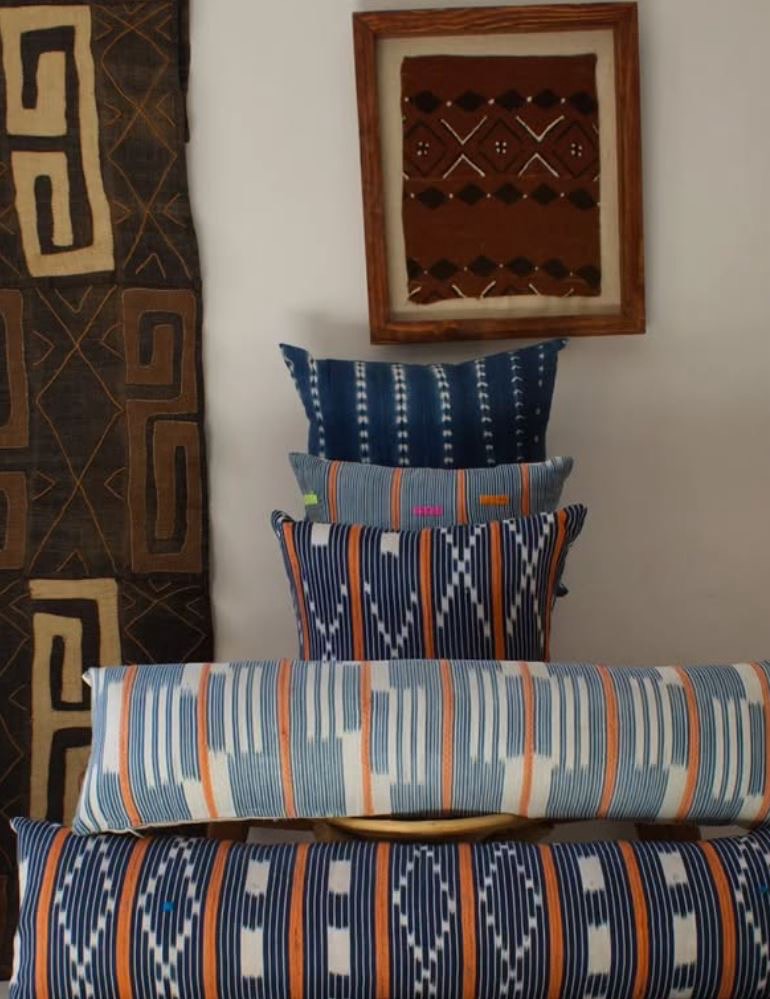
The African Home
13. When you picture a beautiful African home, what do you see?
I see a home that follows the philosophies found within African design: the use of indigenous materials, a deep appreciation for artisanal craftsmanship, and objects that carry symbolism and meaning.I also think it is important that a home is designed within its own cultural and environmental context. There is no single way for an African home to look because the continent itself is so diverse.
14. What role do objects, artwork, textiles and décor play in making a house feel like home?
I think they are what give a home personality. The architecture gives you the space, but the things you choose to put into it tell the story of the people who live there. Objects, artwork and textiles can bring colour, texture, memories, culture and a sense of individuality into a home. For me, a home should feel collected over time rather than simply decorated.
15. Is there a particular object or piece in your own home that has a story or emotional significance for you?
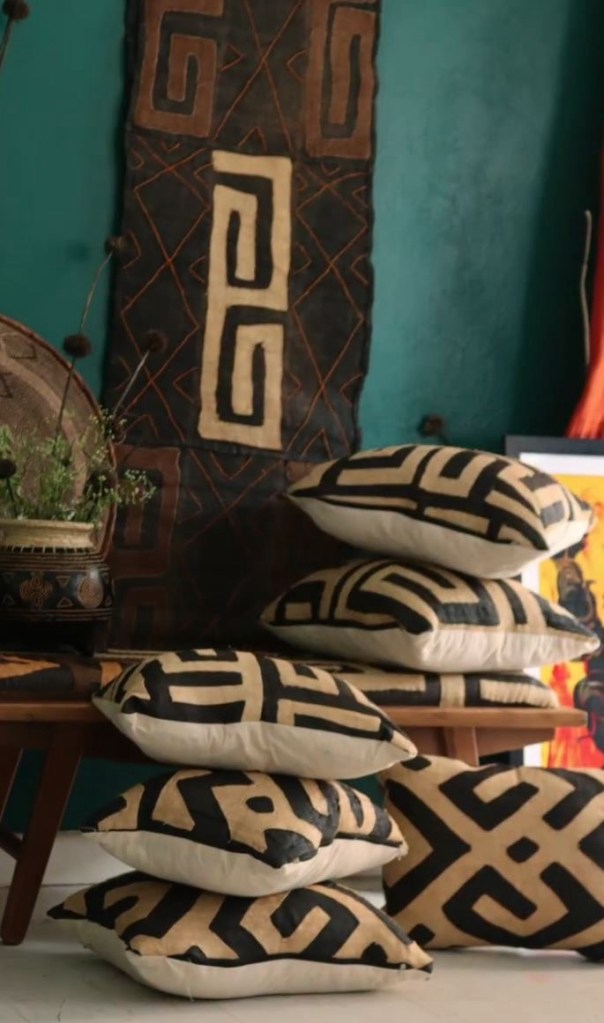
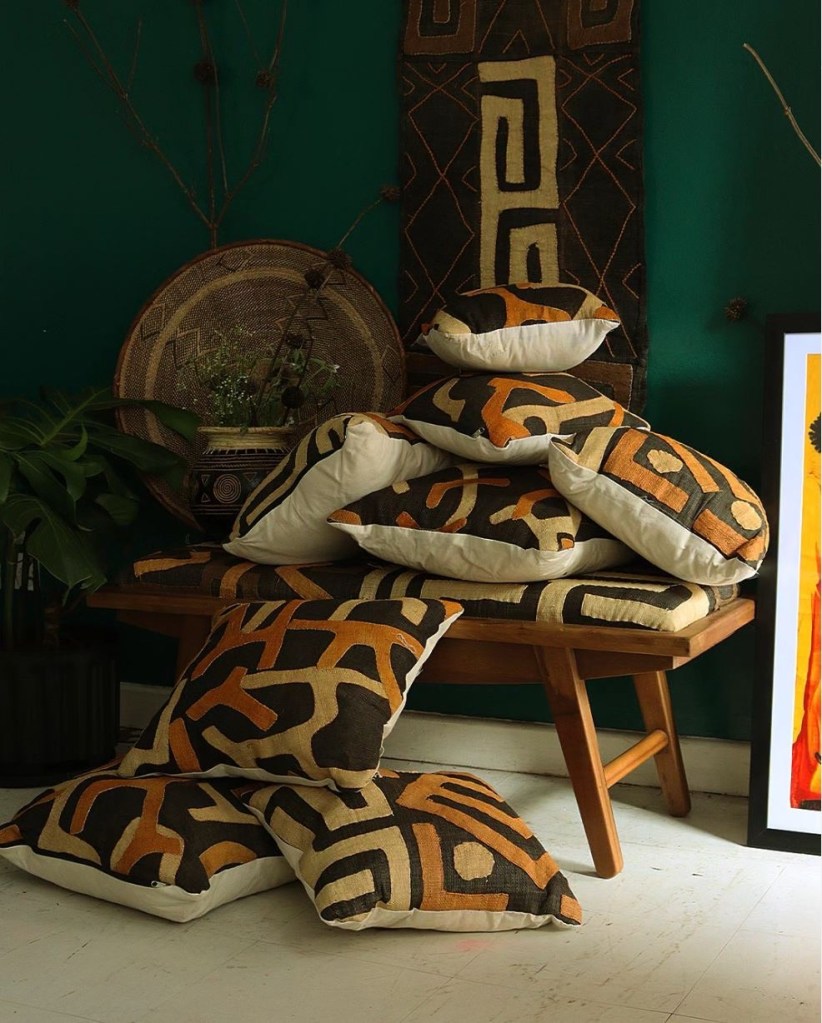
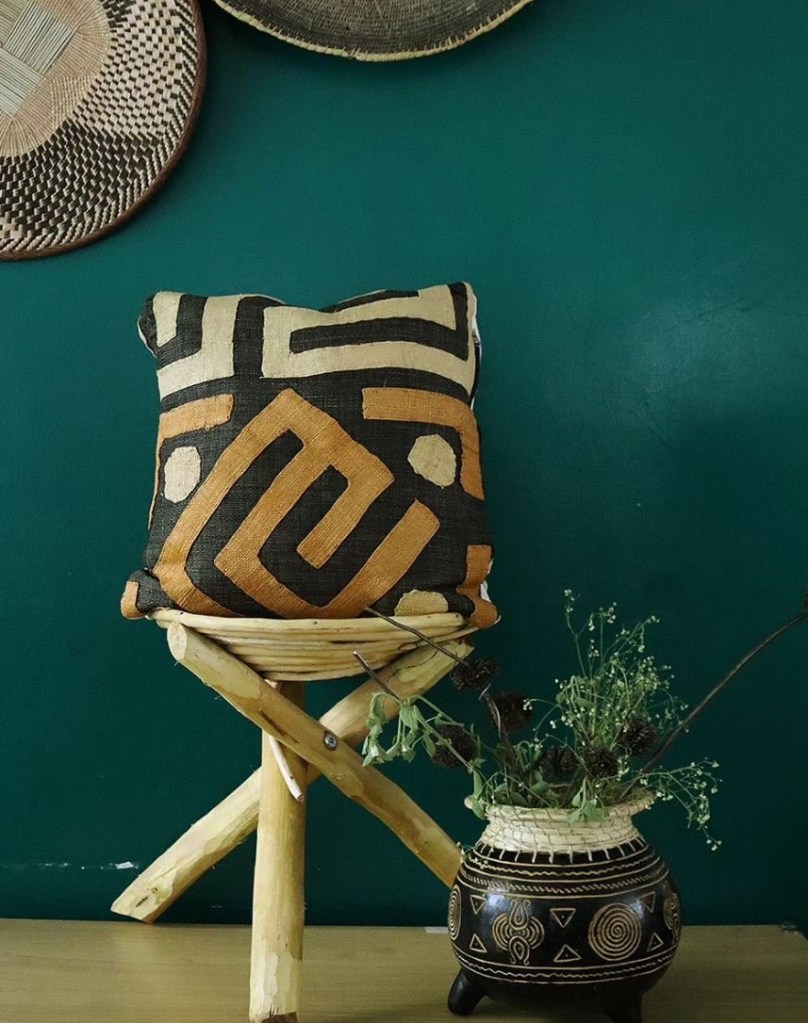
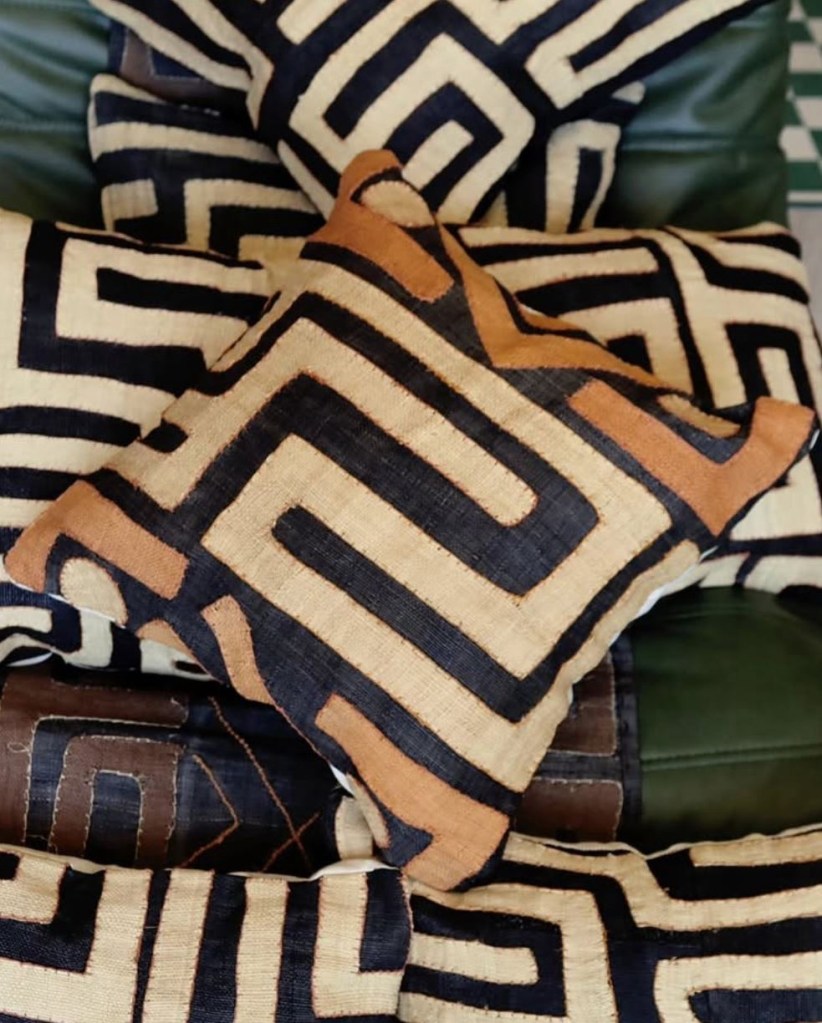
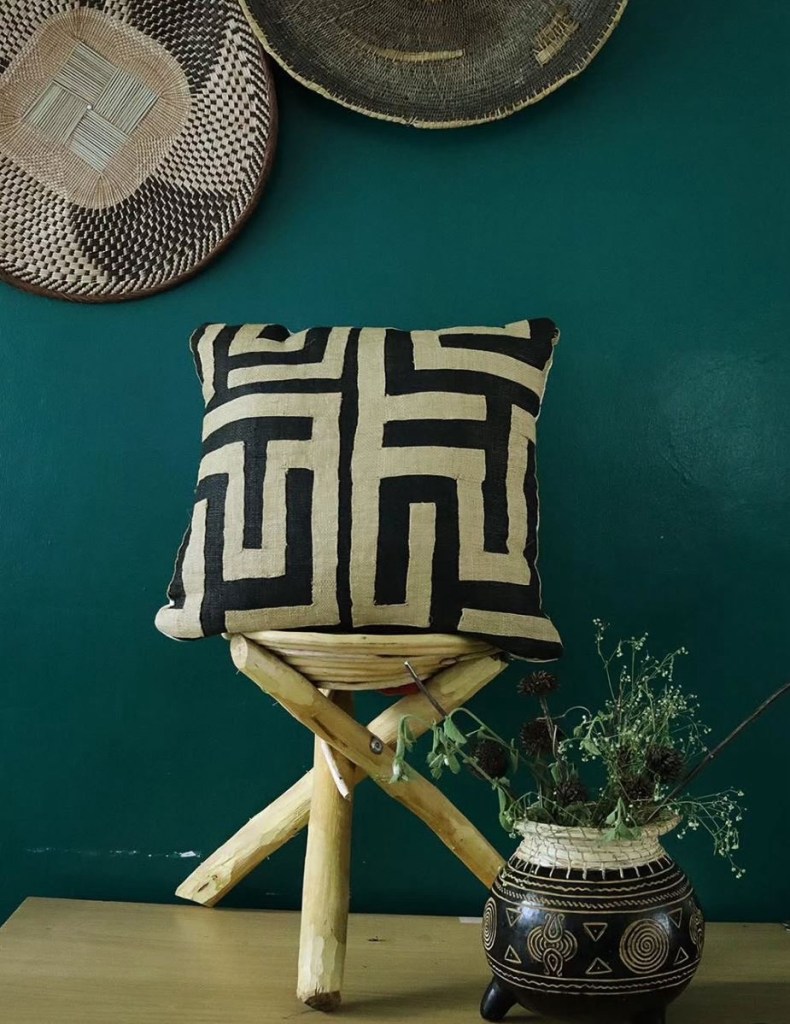
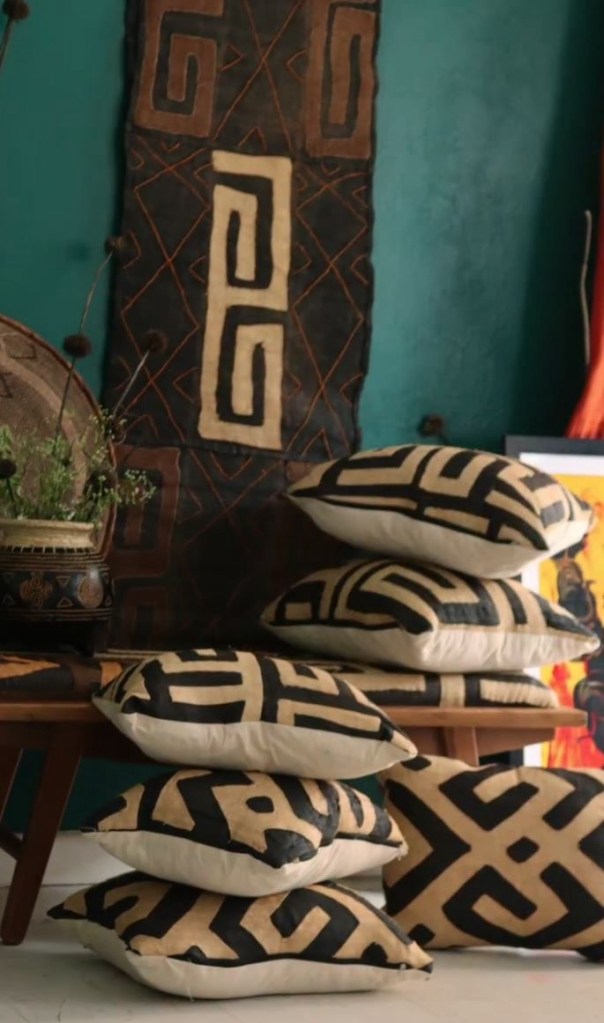
I am a lover of African textiles, and I have a vintage Kuba piece that I love very much. I also have an art piece by a local artist, Kharsh Art, made from recycled African fabrics, which is very special to me.
16. What do you think people sometimes misunderstand about African-inspired interiors?
I think people sometimes assume that African interiors have to look a certain way. That really isn’t the case. Africa is incredibly diverse, and design can be shaped by different cultures, traditions, materials and environmental conditions, so there are many different ways to express an African interior. African interiors can also be modern, contemporary and sophisticated while still being deeply rooted in culture and identity.
17. Do you believe our homes should reflect where we come from, where we live now, or where we aspire to be?
I think they can reflect all three. The idea of Sankofa( a ghanaian word that literally means “to go back and get it) captures this beautifully. Our traditions and cultural practices can inform contemporary design, allowing our homes to have a sense of identity while still feeling relevant to the way we live today.
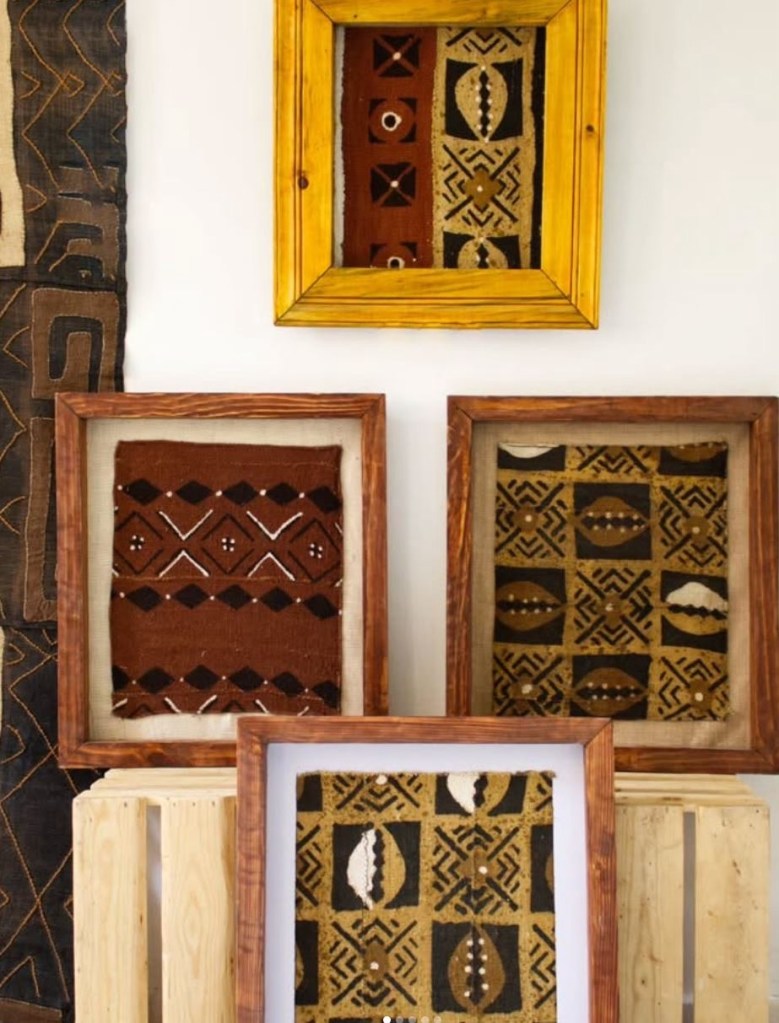
Craftsmanship and Local Creativity
19. How important is supporting African artists, makers and craftspeople to Afro BOUTIK’s philosophy?
It is very important to us. Supporting African artists, makers and craftspeople is a big part of our company’s vision and values, and it is reflected in many of the products we create here.
20. What do you look for when deciding whether a product, artwork or piece of craftsmanship belongs in the Afro BOUTIK collection?
We look for pieces that align with our values of culture, craftsmanship and meaningful storytelling. They also need to be beautiful and feel like a natural fit within the Afroboutik collection.I also consider how the piece can exist within a contemporary interior and whether it can bring something distinctive to a space.
21. What is one thing about African craftsmanship that you wish more people outside the continent understood?
I wish more people understood that African craftsmanship is not something that belongs only to the past. Handmade African objects are often seen as traditional in a way that places them outside contemporary design, but that is not the case.These techniques, materials and traditions can be reinterpreted in ways that feel modern, sophisticated and completely relevant to contemporary interiors.
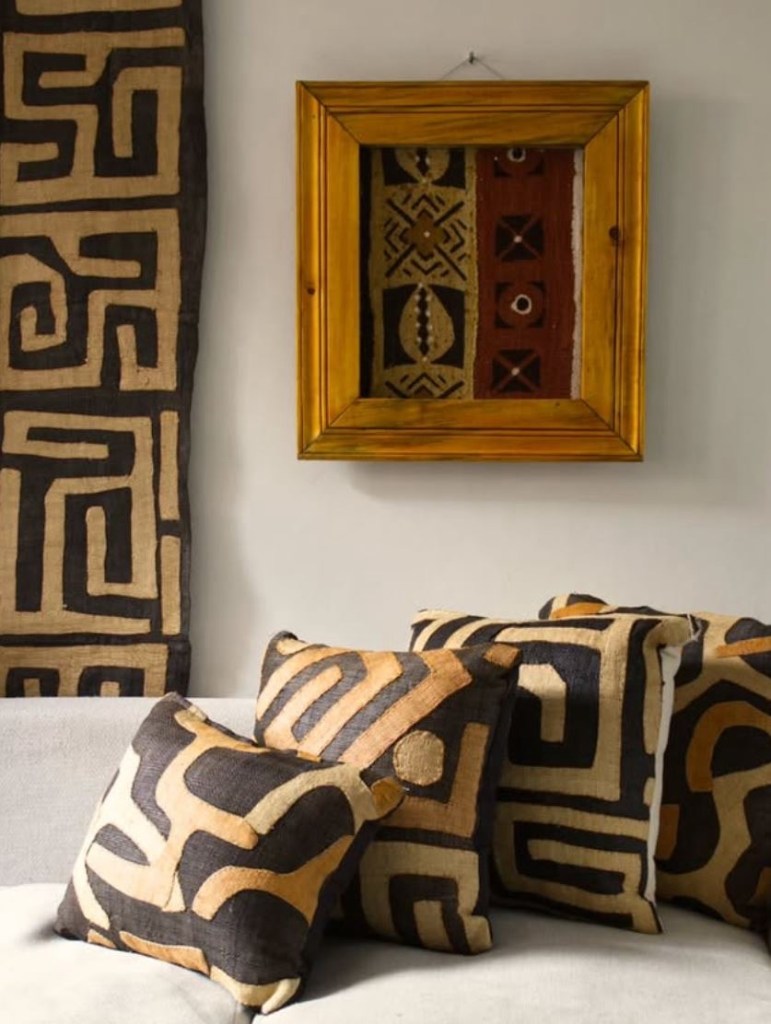
The Personal
33. What does “home” mean to you personally?
Home is a place that feels like you. It is somewhere you can see pieces of your story, your culture, your memories and your personality reflected around you. For me, it is less about having a perfectly designed space and more about creating a space that feels personal, comfortable and lived in.
34. What is one thing you believe every home should have?
Something meaningful and something handmade.
35. What is your favourite African design influence—whether a material, pattern, place, tradition, artist or object—and why?
African textiles and African masks. They are so beautiful, unique and symbolic, and I think they are always a wonderful addition to a home.
36. What is one piece of advice you would give someone who wants to bring more African character into their home without making it feel overly themed?
Start with one African textile.
Closing Question
38. If someone looks through this Africa & Decor book years from now, what would you like them to understand about African homes, African creativity and the people creating this new design story?
I would like them to understand that African design is not one thing. It is a collection of different cultures, traditions, materials and techniques, each with its own story. I would also like them to see African design as luxurious and timeless, with a deep appreciation for indigenous materials and artisanal craftsmanship.
Rapid Fire Round…
A fun quick rapid fire question round with Penninah, and gooooo!
● Minimalism or maximalism? Maximalism.
● Colour or neutrals? Color.
● Vintage or contemporary? Vintage.
● Art or furniture? both.
● Indoor plants or fresh flowers? Indoor plants.
● One African city whose interiors inspire you? Zanzibar .
● One material you could never get tired of? All natural materials.
● Your favourite room in a home? Living Room.
● Coffee table styling essential? A good coffee table and a nice candle.
● Your dream African interior destination? Marrakech.
● One word that describes your design philosophy? Cultured, lived in and authentic.
“What does it mean to create an African home today?”
It means taking inspiration from our cultures, materials, craftsmanship and histories, and coming up with creative ways to incorporate it into our homes.

